Cake Overdrive Instructions
← Back to product pageBuild Difficulty: Easy
Components
| C1 | 10nF |
| C2 | 10uF Electrolytic |
| C3 | 100uF Electrolytic |
| C4 | 10uF Electrolytic |
| C5 | 82nF |
| C6 | 470pF |
| C7 | 10nF |
| C8 | 47nF |
| R1 | 1M |
| R2 | 10K |
| R3 | 100K |
| R4 | 82K |
| R5 | 220R |
| R6 | 10K |
| R7 | 100K |
| R8 | 220R |
| R9 | 1K |
| R10 | 10K |
| R11 | 1M |
| D1 | 8.2V Zener Diode |
| IC1 | LM741 or TL071 |
| VOL | 50K Log |
| GAIN | 50K Reverse Log |
| PRESENCE | 50K Linear |
Build Notes
Where capacitor type isn't specified, you can use monolithic ceramic or film type.
Different verisons of this cirucit over the years have used LM741 or TL071 chips. The TL071 is a more modern and better quality IC but you can try either. Use an 8 pin DIP socket if you want to switch chips easily.
Board Connections
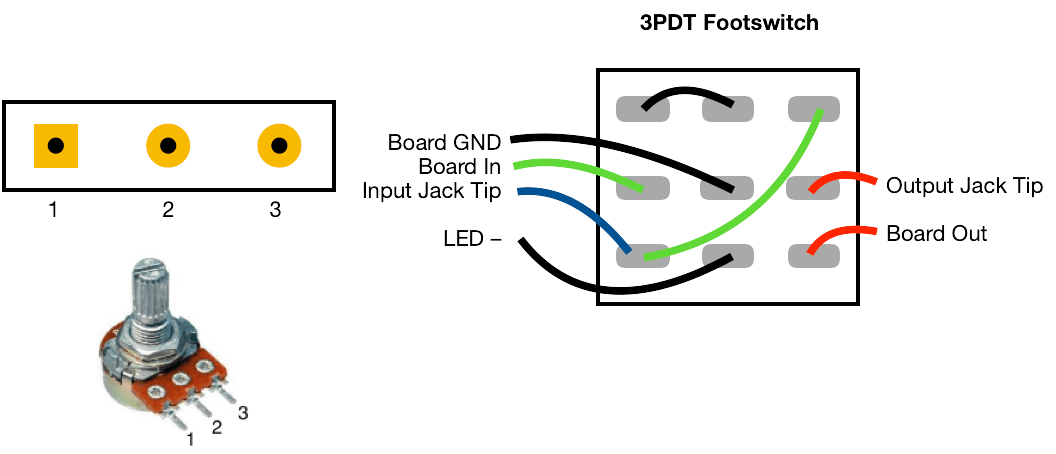
The PCB connections are labelled as the following: I - Input, O - Output, V - 9V DC in, G - Ground Potentiometers are connected from pin 1 to the square pad on the PCB.
This board was designed so you can use right-angle board mount potentiometers on it if desired, otherwise you will need to solder wired from the pads to the correct pin/lug.
Jack sleeves and DC centre pin should be connected to ground. V, LED + with a 2K2 resistor in series should be connected to the positive pin of the DC connector.